


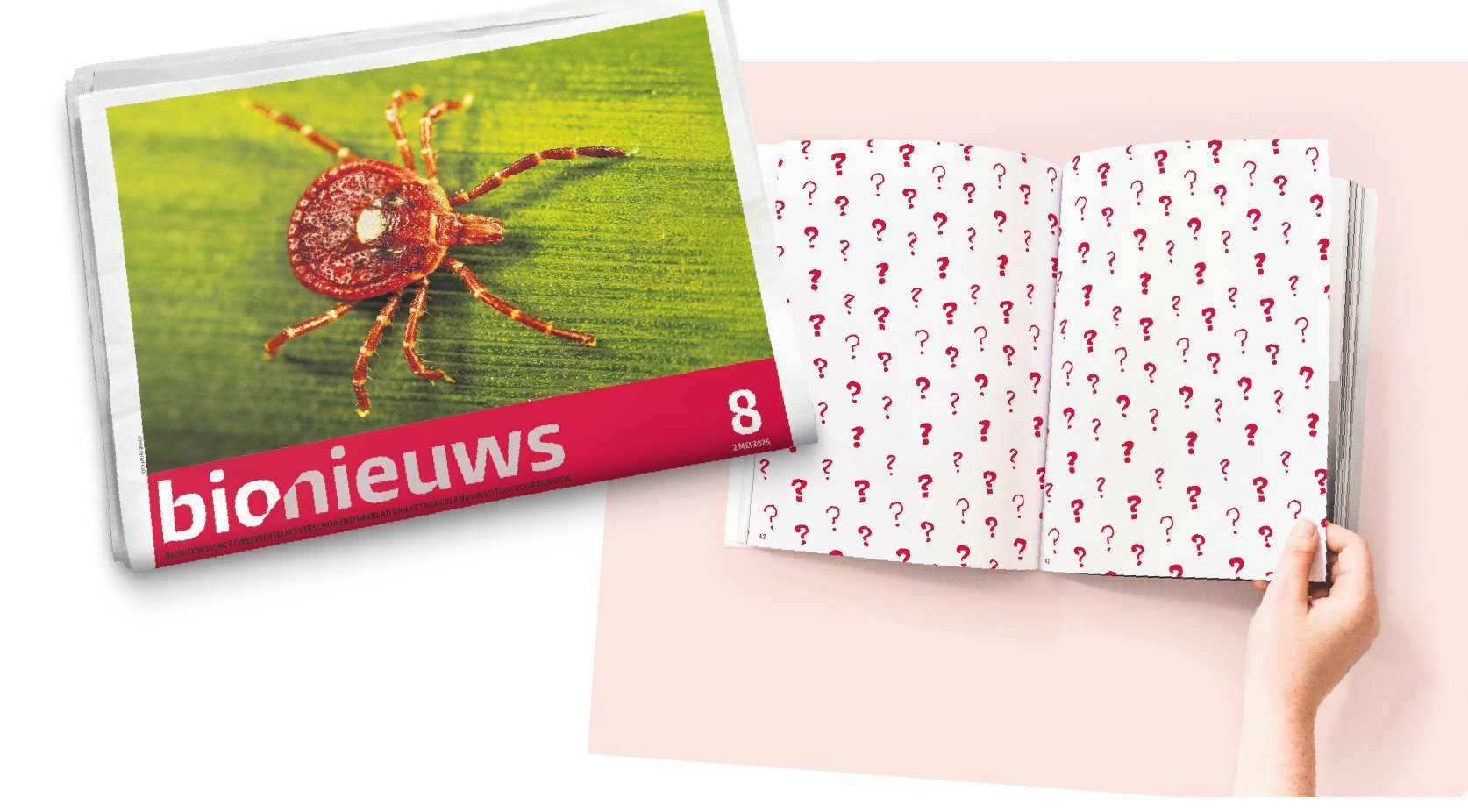
From January 2026, Bionieuws will have a new look: the familiar journal for biologists will no longer appear twenty times a year in newspaper format, but ten to twelve times as an in-depth magazine. Less frequent in print, but with more room for background features, personal columns, strong visual editing and a new design that feels familiar. At the same time, the Bionieuws website will also be upgraded to develop into a central platform for current biology news.
The editorial team is currently working intensively on a new editorial formula that better suits the reduced publication frequency, whilst continuing to do justice to the content needs of its readership. The starting point? Readers will soon have a more attractive, more varied and thicker journal in their hands, without losing the character of Bionieuws.
To get a firm grasp on this, Bionieuws asked four biologists for their views on the new format. What is indispensable, what can go, and which sections or emphases are still missing?
René Westra, biology teacher with more than fifty years of experience in secondary education
‘I am a loyal reader of Bionieuws and value the journal enormously. Sections such as QED, Nomen est omen and the Nieuwstoets are each a pleasure to read and valuable tools in teaching practice. The science news also inspires me to create questions for pupils about recent research. I would therefore very much like to see these sections return in the new editorial formula.
‘When I look at the balance within the journal, however, I see a strong focus on research and science. Extremely valuable, but secondary education deserves a more prominent place within it. A great deal of wonderful things happen in the classroom, but these remain underrepresented in Bionieuws. And yet a considerable proportion of the readership comes from education! It would be valuable to share inspiring lesson ideas more often, ideally ready-made and accompanied by a worksheet. Many teachers do not have the time to develop materials themselves, but are open to inspiration.
‘Include short, inspiring background pieces from the classroom – practical and relatable. Do involve colleagues who attend the annual NIBI conferences or give workshops – there are real icons of education among them. Bionieuws should build a bridge between science and education. That cross-pollination can enrich both sides enormously.
‘A section like Soortgenoten, but extended to include people from secondary education, would also be very welcome.’
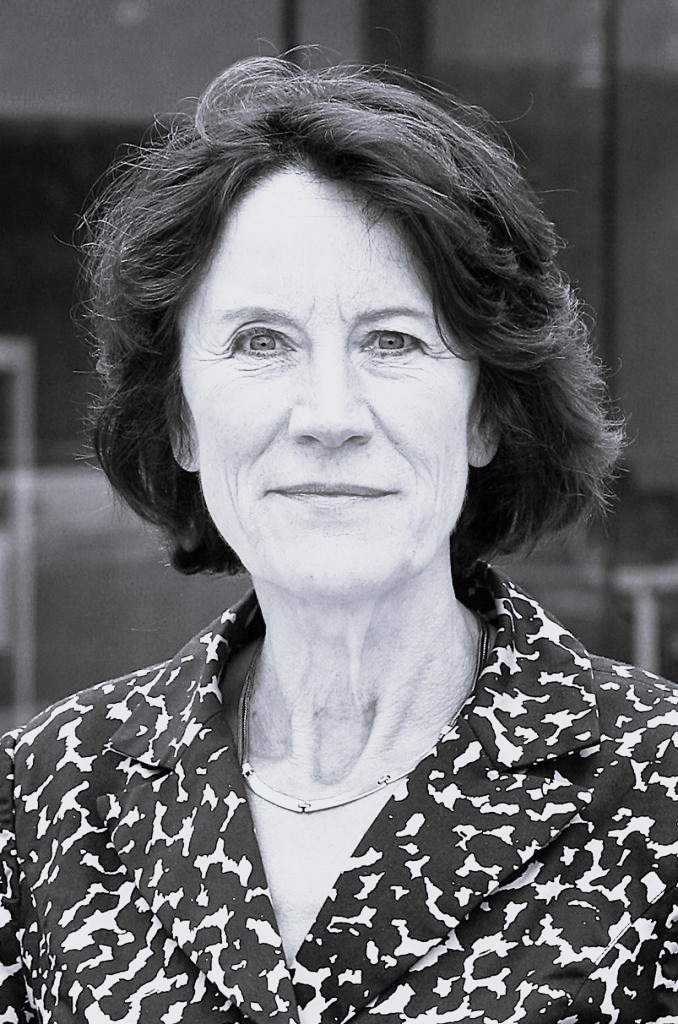
Louise Vet, emeritus professor of evolutionary ecology and former director of the Netherlands Institute of Ecology (NIOO-KNAW)
‘First of all, I would like to say that I value Bionieuws enormously. It often contains interesting items and has good depth. There is really nothing I would want to miss. I am, of course, one of those boomers who reads the paper in the back garden or takes it along to read on the train. In that respect, I do find it a shame that the journal will appear less frequently in print. Because I already spend so much time in front of a laptop.
‘But a more hybrid formula certainly offers opportunities too, even if deciding what to put in the print edition and what to publish online is quite a challenge. It will come as no surprise that I consider an ecological angle indispensable, because that is the science of the 21st century. Without a healthy biosphere, we are in serious trouble. I keep hammering on the three pillars of the energy transition, the circular economy and, above all, biodiversity. Put top-quality research centre stage, present the facts, fight fiction and be critical of greenwashing. And try to focus less on identifying problems, and more on positive – nature-based – solutions such as flower-rich embankments in water management. Show that biology builds bridges towards policy. And offer students a platform more often: they will make sure that Bionieuws also resonates digitally on TikTok, Instagram, and so on.’
Peter Klaren, animal physiologist and associate professor at Radboud University
‘I see Bionieuws as a bag of liquorice allsorts: I browse through it, pick out what appeals to me, and leave the rest. I don’t mind not reading everything; the range is broad and that suits the diversity of the field. In terms of genres, the journal is well balanced, and all of them should stay. I rarely feel anything is missing – though a little more attention to university education would be welcome. At the moment the emphasis is often on secondary school.
About six or seven times a year I use pieces from the journal in my own teaching. The question-and-answer feature about dense bones in the last issue, for example: I used that in my statistics course, including the original dataset. That doesn’t happen to me with many journals. Beyond that, Gert’s column, the Peiling, and the book reviews are sections I always read.
‘If the format changes, that’s fine – as long as the content remains strong. A little more depth would be welcome, in my view. Let experts speak at greater length to place research in a broader context, rather than just a brief quote. That kind of depth makes the journal extra valuable.’

Stijn Leegte, biology student at Vrije Universiteit Amsterdam and treasurer of the National Consultation of Biology Students (LOBS)
‘I still remember the first time I saw Bionieuws lying there: that red line with the logo and above it that large front-page photo – it’s so recognisable and immediately catches your eye. If you love biology, you just want to open it. Hopefully the new magazine will continue to use that kind of striking imagery. As a student I appreciate the mix of scientific news, politically relevant topics, and lighter features. Please keep that up. The QED is a favourite, as is the LOBS student column. It’s important that students have a place in Bionieuws – and hopefully will continue to do so – for instance through interviews or articles about interesting master’s programmes or research projects.
‘What I do miss is online visibility. You reach young people through an active social media approach – on Instagram, for example. Share current articles and visuals there, and you’ll genuinely build a community. It takes time, but it matters if you want to connect with students.
‘And perhaps there’s room in the new journal for something new: attention for people who engage with biology in creative ways – artists or designers, for example. That would be a surprising addition.’
Tips or ideas about the new editorial formula or website of Bionieuws? Email: schie@bionieuws.nl