


This is an episode from the predecessor of the column 5 questions: QED. This column centred on a single question.
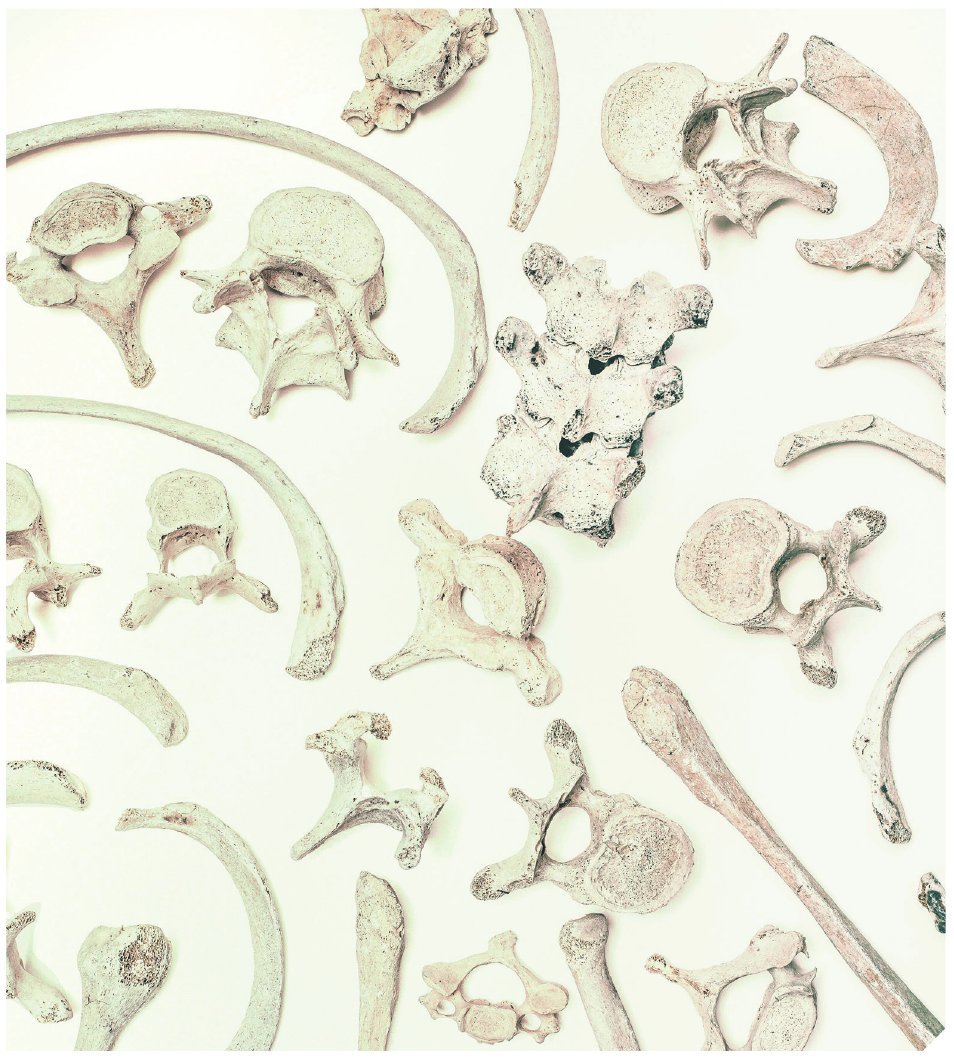 Photo: ImageSelect
Heavy bones may sound like a myth, but there could be a grain of truth in it after all.
‘It’s because I have heavy bones’ is a commonly used explanation for a high body weight – one that is usually met with a degree of scepticism, much like ‘the dog ate my homework’ or ‘the bridge was up’. But is that scepticism warranted? Do heavy bones actually exist?
The short answer: heavy bones do genuinely exist. One person’s bones can be slightly heavier than another’s. The relative weight of bones even varies within a single individual. Bone mass peaks at around the age of 25 (Journal of the Pediatric Orthopaedic Society of North America, 2024). Bones continuously renew themselves. After peak bone mass, the balance shifts towards bone resorption rather than bone formation; which is why older people more often suffer from light, brittle bones and sustain fractures more readily.
Skeleton
On average, the bones of adult men weigh approximately –0.25 kilograms plus 0.046 times height in centimetres, plus 0.036 times body weight in kilograms, minus 0.012 times age in years. This was calculated by American researchers on the basis of skeletal weight from cadavers (Health Physics, 2018). For a 40-year-old man who is 184 centimetres tall and weighs 85 kilograms, that works out at nearly 11 kilograms of skeleton. This refers to the total skeletal weight of a living (or recently deceased) person; the total dry weight of bones, as found in skeletons from archaeological excavations, amounts to around 3 to 4 kilograms (International Journal of Osteoarchaeology, 2008).
Mechanical loading causes bone density to increase
Besides age, body weight also plays a role in bone mass. Mechanical loading causes bone density to increase, making bones slightly heavier. This is why activities such as running and walking are beneficial for bone health – stronger bones are less prone to fracture. But simply having more fat mass pressing down on bones produces the same effect. In broad terms, bones change shape very slightly under pressure. The interior of bones consists of a network of cells that exchange various substances, making the whole structure a kind of fluid-saturated sponge. When the shape changes, that fluid begins to flow. So-called osteocytes detect this and subsequently stimulate other cells to form new bone.
Although this process also occurs in people who carry a large amount of body fat resting on their skeleton, the effect is not large: in people with obesity, the skeleton weighs approximately half a kilogram more (The Journal of Nutrition, 2006).
Although there is considerable variation in bone mass overall, the differences between individuals of the same height, age, and build are probably negligible. Bone mass is certainly not a good explanation for excess weight. In fact, the heavier a person is, the smaller the relative contribution of skeletal weight, as the study in Health Physics shows. Excess weight is genuinely caused primarily by fat mass.
In very rare cases, people can genuinely speak of heavy bones as the principal explanation for a relatively high body weight. In marble bone disease, or osteopetrosis, bone formation greatly exceeds bone resorption. Bone density then increases enormously, with all manner of unpleasant consequences; such bone is not healthy. The recessive form of this condition occurs in approximately 1 in 250,000 births, and the dominant form in 1 in 20,000 births (Orphanet Journal of Rare Diseases, 2009). For everyone else, bones have little to do with a relatively high body weight.’
Awkward questions from pupils? Send your questions to redactie@bionieuws.nl.