


During my master’s degree, we routinely sat in lectures with a packet of crackers at the ready. Entire rows of students munched their way through long days packed with lectures on brain regions, neurotransmitters and cognitive models. You might almost have thought it was a compulsory extra: textbook, notepad, packet of crackers.
Until one of our professors gave a lecture on epilepsy and hemispherectomy. She was not at all happy about us eating during her lectures. Not because she was worried about crumbs on the floor or peanut-buttery fingers on her slides, but because of our brains. According to her, you should drink only water in the lecture theatre, ‘because otherwise your entire cognitive capacity goes into digestion instead of processing information’. She said it with such a serious expression that we immediately felt caught out – as though that one cheese cracker had just knocked out half our hippocampus.
Naturally, I found myself wondering afterwards: is that actually true? Is eating during lectures bad for your brain? Or does it actually help you stay sharp? I looked into it. Not into the crackers, but into the literature. And it turns out: it’s complicated (as is so often the case).
There is a fair amount of evidence that what you eat affects your cognitive function. Sugar, for instance, gives a brief spike in energy, but an equally rapid crash – not ideal if you still have 45 minutes of listening ahead of you on the difference between Broca’s and Wernicke’s areas. A heavy meal high in fat and carbohydrates makes you sluggish: your body has to get on with digesting and diverts blood away from your brain to your gut. So Professor Van der Brein did have a point.
As though that one cheese cracker had just knocked out half our hippocampus
On the other hand: hungry students are hardly top-performing learners either. A rumbling stomach is distracting. And light snacks – such as nuts, fruit, or yes, even crackers – can actually help keep your blood sugar stable and maintain concentration. Especially during long days.
What really does work, the studies say, is water. Hydration is key. Even mild dehydration (you barely notice it) can reduce your ability to concentrate and impair your working memory. So: bringing a water bottle is far from unnecessary. Then came the great debate about whether coffee counts as hydration too. It seems that one cup of coffee is perfectly fine. That level of caffeine can help you stay sharp. But the limit is reached quickly – five cups and you’re bouncing off the walls without any idea what the lecture was about.
So what is the ideal lecture snack? Something light and nutritious, with slow-release carbohydrates and a bit of protein. Things like a banana with peanut butter, a handful of unsalted nuts, or a wholegrain cracker with hummus. Just make sure the latter isn’t too noisy to eat. Not for your brain’s sake – but for the sake of the person sitting next to you.
In short: eating in lectures? Yes, but with some thought. Give your brain fuel, but don’t drown it in digestive processes. And always bring a bottle of water. Our professor may not have been entirely right, but she wasn’t entirely wrong either.
Bon appétit – and good luck with your studies.
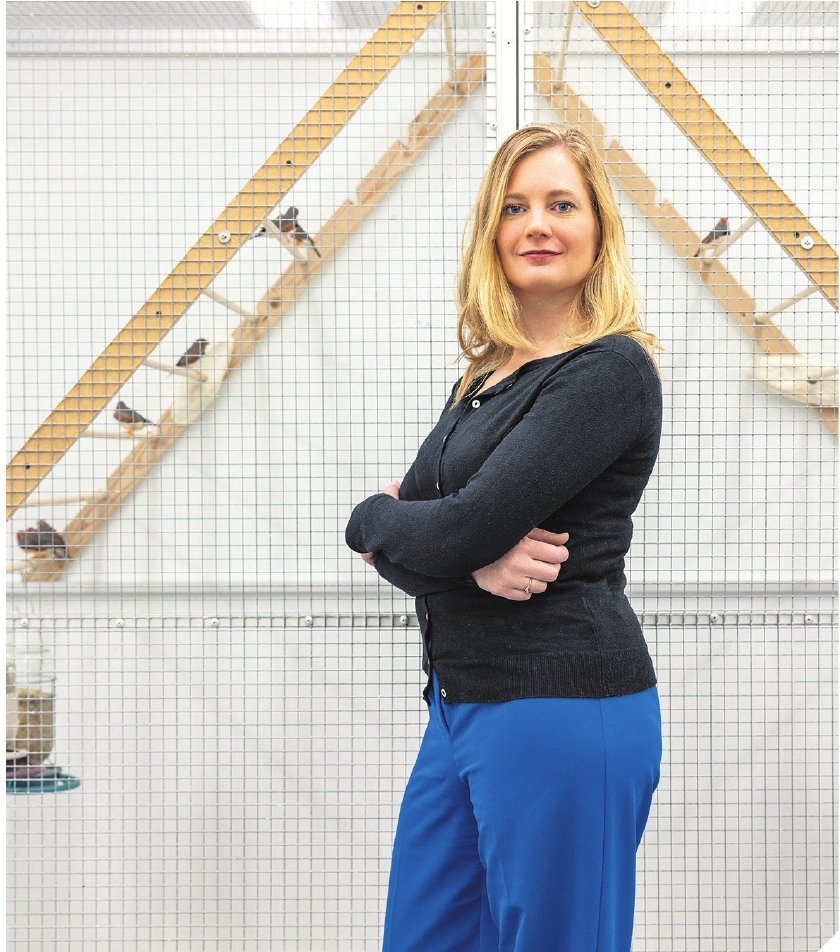
Michelle Spierings works as a behavioural biologist at the Institute of Biology Leiden and the University of Vienna, researching speech, song and cognitive development in human infants, common marmosets, budgerigars and zebra finches.