



More than 2,300 schools participate in the EU School Fruit Scheme. Children there receive not only free vegetables and fruit, but also structured food education. They learn to taste, cook and grow. On 15 April, Minister Femke Wiersma visited a tasting lesson and kitchen garden at Kindcentrum Bamboe in The Hague: ‘One of the best working visits ever’. What you learn young, you carry into old age – including in the kitchen.
This themed issue of Bionieuws addresses the challenges and solutions surrounding food choices, which are often formed at a young age. This issue was produced with financial support from Jong Leren Eten, but was compiled entirely independently by the editorial team.
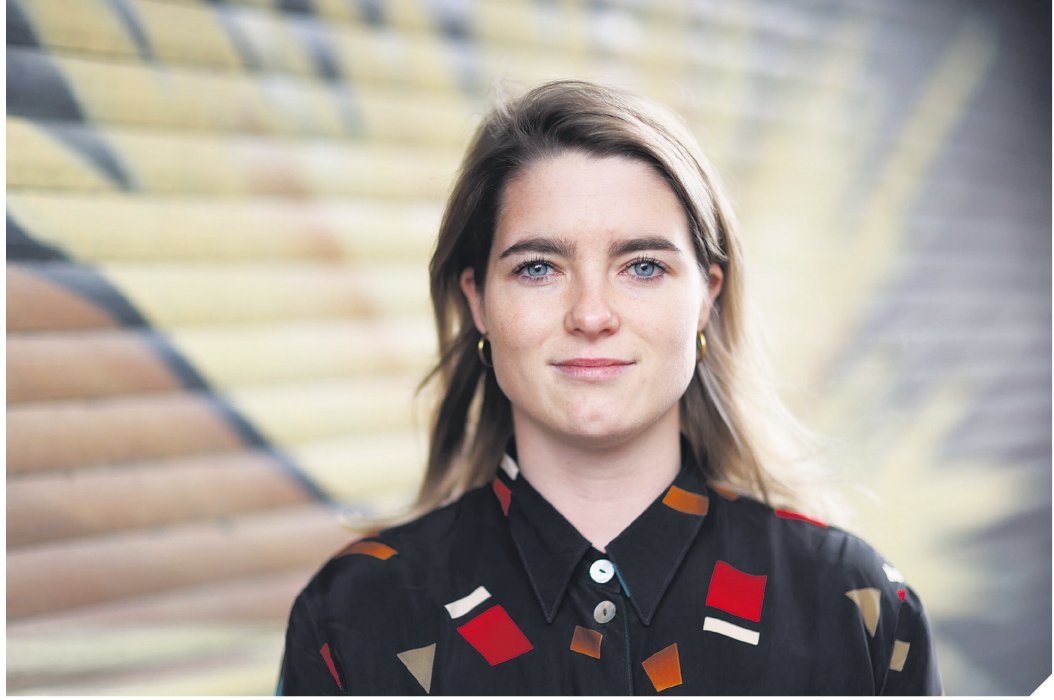 Neuro- and nutritional scientist Sophie van Zonneveld: ‘A healthy diet contributes to a well-functioning brain.’ Photo: Sander Martens
The road to a healthy brain begins in the gut, argues neuro- and nutritional scientist Sophie van Zonneveld. Her research shows how healthy eating can make a difference in psychiatric and neurological conditions.
‘I always call them our friends with benefits: the micro-organisms in our gut that help digest food. Look after them well, and you get a great deal back in return. A healthy diet supports a diverse gut microbiota, has anti-inflammatory effects, and contributes to a well-functioning brain,’ says neuro- and nutritional scientist Sophie van Zonneveld. At the University Medical Centre Groningen, she is conducting doctoral research into the gut–brain axis – more specifically, into the effect of an anti-inflammatory diet in people with bipolar disorder, schizophrenia, or Parkinson’s disease.
‘These patients often have an immune system that is constantly running just a little too hot – as if their heating is always turned up one degree too high. They don’t have a fever, but they do have what are known as low-grade inflammations,’ Van Zonneveld explains. As a result, the body has barely any moments of rest and recovery. ‘We don’t yet know exactly how it works, but these inflammations appear to disrupt cellular communication and have a direct effect on cognitive function. If diet can dampen those inflammations, the symptoms of brain disorders may also diminish.’
Van Zonneveld therefore focuses on foods rich in fibre and antioxidants – vegetables, fruit, legumes and wholegrains. In the gut, certain bacteria break down fibre into short-chain fatty acids: compounds that have anti-inflammatory properties and may be able to calm the overactive immune system.
‘Moreover, these fatty acids strengthen the mucus layer on the inside of the gut wall. That matters, because the gut is the training centre for the immune system: gut bacteria train the immune cells, which thereby learn to distinguish what is or isn’t part of the body, or what is harmful. If that balance is disrupted, problems can arise. With too thin a mucus layer, micro-organisms can slip through and end up in places where they shouldn’t be. The immune system then fires up in response there as well.’
Healthy food thus literally nourishes the right bacteria, which in turn influence the immune system and, through it, potentially the brain. In Van Zonneveld’s study, patients with one of the brain conditions mentioned therefore had healthy meals delivered to their homes for twelve weeks – breakfast, lunch, dinner and snacks included. ‘I am still completing the final data collection and analyses, but it appears that overall health in the Parkinson’s group is improving, including lower BMI and blood pressure. Many participants also report feeling more energetic and responding more steadily to stress. However, the data still need to be thoroughly checked before we can draw any definitive conclusions.’
Low mood
Although the research focuses on specific patient groups, Van Zonneveld emphasises that a healthy diet is important for everyone. ‘Behaviour and mood are regulated by neurotransmitters. Many of the precursors of these signalling molecules are released from food in the gut, or even produced directly by bacteria. If that process does not function properly, it can lead to, for example, a deficiency of serotonin – and thus to low mood.’ Animal studies also show that the gut microbiome influences behaviour. ‘In mice without gut bacteria, this is clearly apparent: if they receive a microbiome from an anxious mouse, they themselves become more anxious. The same applies to bold mice. The behaviour of the donor mouse is adopted.’
Eating healthily is not always straightforward in practice, as Van Zonneveld knows – life in modern, busy society is riddled with unhealthy food temptations. ‘The supermarket is packed with ultra-processed food: low in fibre, vitamins and minerals, but high in calories. These products are often adorned with enticing text and attractive packaging. You rarely see that with a head of broccoli or an apple. Young people in particular are susceptible to that kind of marketing, including online. Although their brains are still plastic and flexible, you naturally want to nourish a developing brain with the right building blocks. Starting early offers protection in the long term. Healthy food is simply the foundation of every cell in your body.’
‘Behaviour and mood are regulated by neurotransmitters’
For young people, small adjustments to their diet are sometimes sufficient. According to Van Zonneveld, the foundation remains the Dutch Nutrition Centre’s Wheel of Five. ‘As a parent, there is a great deal you can do to avoid arguments about unhealthy snacking. Buy fewer biscuits, crisps and other processed products, for instance. Put fruit somewhere visible, so children are more likely to reach for it. And when they come home from school feeling hungry, a toasted sandwich on wholemeal bread is an excellent alternative. Above all, set a good example yourself.’
Van Zonneveld’s doctoral research is nearing completion, but she is still uncertain about her next step. ‘Research is wonderful, but I find bridging the gap between science and society at least as important.’ Last November, No guts, no glory – the broader research team working on lifestyle interventions in mental illness – received the NWO Communication Initiative Award. ‘A wonderful recognition of all the lectures, workshops and other forms of science communication we provide, to make people – young and old – more aware of the importance of nutrition for mental health.’