


Photo: ImageSelect
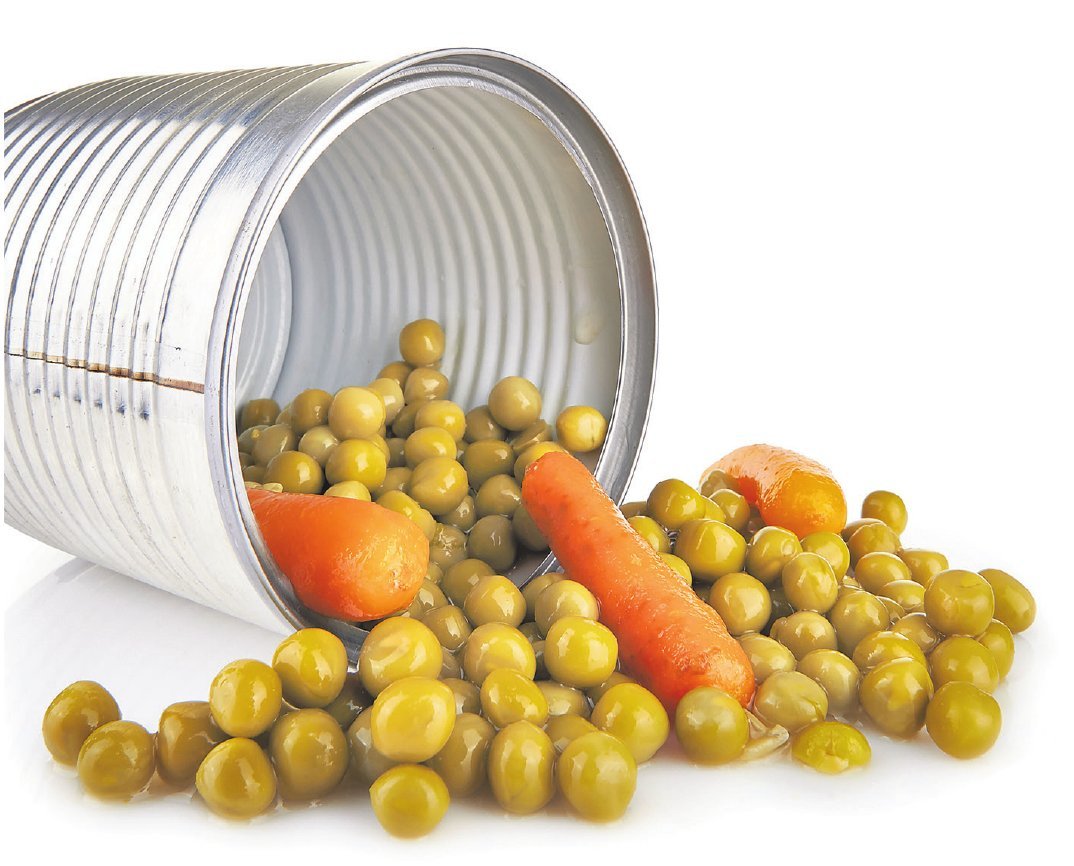
Alongside fresh vegetables, there is nowadays a wide choice of tinned and frozen alternatives. But are these preserved vegetables a nutritionally adequate substitute?
Broccoli, cabbage, courgette… most vegetables do not rank particularly high on children’s lists of favourites. To ring the changes in terms of taste, smell or texture for younger members of the family, tins or frozen vegetables can be a godsend. They are also simply very practical: the contents can go straight into the pan or are ready to toss into a salad. But how nutritious are these long-life vegetables really?
According to the Netherlands Nutrition Centre, vegetables from a tin, jar or the freezer contain just as many nutrients as unprocessed vegetables. Yet the picture is slightly more nuanced, says Matthijs Dekker, a food technologist at Wageningen University: ‘The choices you make in the supermarket and in the kitchen determine how many nutrients you get from your vegetables’, he argues. Fresh, locally grown vegetables are the healthiest, according to Dekker, as they retain virtually all their nutrients. ‘Frozen and jarred vegetables are not far behind: after processing, preserved vegetables still contain around 70 per cent of their beneficial compounds.’
Vacuum
He explains why: ‘With jarred or tinned vegetables, the producer heats the vegetables directly in the packaging shortly after harvest, which kills micro-organisms and creates a vacuum so that no oxygen can get in. Nutrients that are sensitive to heat, such as vitamin C and certain B vitamins, can partially break down in the process. Frozen vegetables also undergo a brief heating step first. When the vegetables subsequently freeze, sharp ice crystals form inside the plant cells, which are full of moisture, causing the cell membranes and cell walls to rupture and nutrients to leach out.’
‘You should certainly not boil frozen vegetables in water a second time’
Although all of this sounds serious, it is actually not as bad as it seems: ‘Nutritional value decreases regardless during the period between harvest and preparation. This is because vegetables are still alive after harvest: all kinds of metabolic processes remain active in the plant tissue, during which vitamins, minerals and other bioactive compounds are lost’, Dekker explains. Because the time between harvest and processing is often very short for frozen or tinned vegetables, these sometimes actually contain more nutrients than their fresh-aisle counterparts by the time they reach our plates. ‘Out-of-season vegetables often come from far away and can spend days in transit to the Netherlands’, he explains. ‘They then sit in a distribution centre for a while; fresh supermarket vegetables are often weeks and sometimes even months old, meaning they can have lost up to 40 per cent of their original nutrients.’
Preparation
Dekker emphasises that for all vegetables – fresh, frozen or tinned – nutritional value also depends strongly on how they are prepared. ‘You should not wash frozen vegetables and should certainly not boil them in water a second time’, he advises. ‘You would be pouring the nutrients that have leached out of the cells straight down the drain with the water.’ With fresh vegetables too, it is not a good idea to cook them in a large volume of water: ‘That way you can inadvertently lose up to half the nutrients. The leaching of compounds can sometimes even be seen with the naked eye: the cooking water becomes discoloured. Steaming is a better option, but the best approach is to stir-fry vegetables in a little oil.’ For tinned vegetables too, a brief warming through is best, ideally in their own liquid. ‘That way the fewest nutrients are lost.’
Awkward questions from pupils?
Send your questions to redactie@bionieuws.nl.
Photo: ImageSelect