


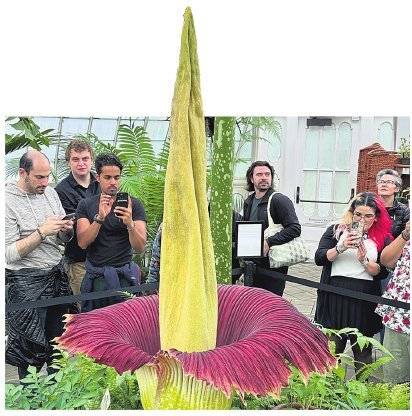
Botanic gardens take great pride in their giant corpse flowers (Amorphophallus titanum), which when they bloom emit a penetrating stench of rotting flesh and draw in visitors. Only 162 individuals of this species survive in its native range of Sumatra, and now American botanists have identified a further serious threat to captive corpse flowers: inbreeding (Annals of Botany, 3 April). A global survey of 1,200 corpse flowers held at 111 institutions shows that 51 per cent are clones or offspring of close relatives. Because the species produces separate male and female flowers and takes at least seven years to bloom, these plants face a shortage of viable seed – a particularly ironic predicament. (GvM)