


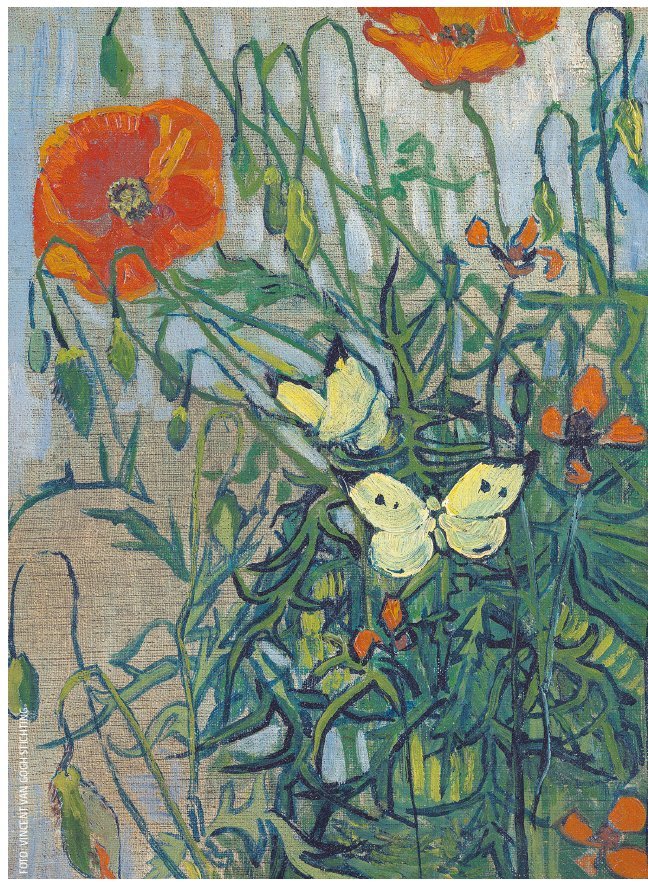
Butterflies and Poppies (1889) – Vincent van Gogh.
Alongside his impressive career in tritrophic interactions, entomologist Marcel Dicke has spent thirty years searching museums for insects in art. On the occasion of his retirement, a modest selection from his collection: ‘You develop an ever sharper eye for it.’
‘Insects are everywhere and essential to life on Earth. They pollinate flowers, play a key role in nutrient cycles, and some of them would happily drink our blood. They cause plagues, but can also be deployed as biological control agents in sustainable crop protection. Eighty per cent of birds eat insects, and for humans too they are an excellent source of protein. In a food web, everyone eats or is eaten. Wonderful, isn’t it?’, says Wageningen entomologist Marcel Dicke (1957). He will deliver his farewell lecture Bugged ideas on 6 June, and on his invitation card two large white butterflies appear on poppies, painted in 1889 by Vincent van Gogh in Saint-Rémy-de-Provence. It is a discovery Dicke made at the Van Gogh Museum in Amsterdam, and one that resonates deeply with him because he himself conducted research into tritrophic interactions involving large whites (Pieris brassicae), in which cabbage plants damaged by caterpillars ‘call in’ parasitic wasps for help. This is a research field he himself put on the map with his doctoral thesis on the relationships between apple trees, mites and predatory mites (Infochemicals in tritrophic interactions, 1988). His career was also marked by a drive to popularise insects, with highlights including the Insects and Society lecture series, organised regularly since 1996, and the Wageningen – City of Insects festival in 2006 (see: ‘Career in beetle flight’). On the occasion of his retirement, he is happy to share a selection from his collection of insects in art.
‘In 1996 I visited all the art academies looking for a speaker who could give a lecture on this topic for the Insects and Society series, but I couldn’t find anyone. So I simply threw myself into it, and ever since I have searched for insects in the visual arts in every city I visit. I don’t look with obsessive intensity, but I always find something. You develop an ever sharper eye for it’, says Dicke. In the hundreds of museums, parks and churches he has visited over thirty years, he has discovered some five thousand works of art featuring insects, photographs of which he has stored in a database. ‘I use these for my presentations, which are set up so that the audience determines which route we take through my virtual museum. That way it is always a surprise for me too which images come up, but I always have a story to go with them.’
Death’s head
From Van Gogh alone he has now found eleven paintings depicting insects. ‘There is one featuring a death’s-head moth – not the death’s-head hawk-moth (Acherontia atropos, ed.), but a great peacock moth (Saturnia pyri, ed.) on which Van Gogh painted not only eyespots on the wings but also a skull on the abdomen. Surely a reference to death, something that preoccupied him greatly’, Dicke observes.
Death is also omnipresent in his painting Prisoners Exercising, which now hangs in Saint Petersburg. ‘It offers a bleak view of a prison courtyard, with prisoners walking in a circle and one of them looking directly at you: Vincent himself. It conveys the desolate, hopeless treadmill of life – yet if you look upwards you see two courting large whites flying towards freedom. White butterflies as a symbol of the soul that lives on after earthly life. Deeply moving.’
‘I don’t look with obsessive intensity, but I always find something’
Another work of art that made a great impression on him is Heaven of Delight by Jan Fabre in the Royal Museum of Fine Arts in Brussels. The ceiling and chandelier of one of the rooms are covered with the blue-green wing cases of jewel beetles (family Buprestidae). A derivative work was exhibited by Jan Fabre in 2011 at the Kröller-Müller Museum as a protest against colonialism.
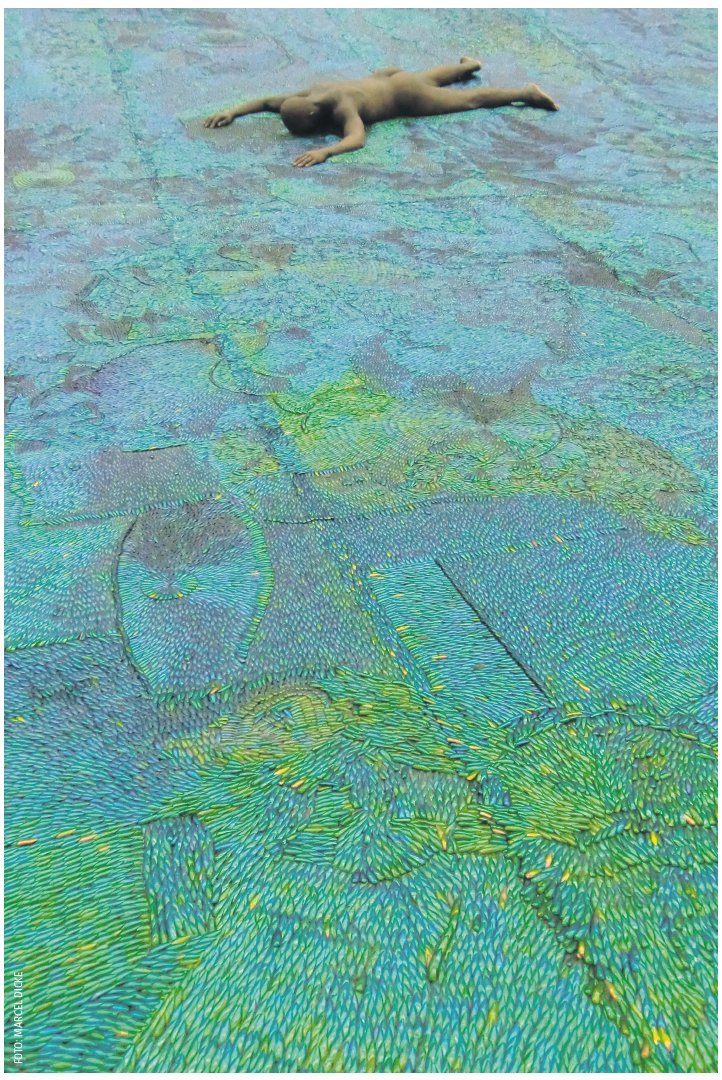
I had to remove a piece of the ceiling of the royal palace because something was growing out of it (2008, detail) – Jan Fabre, Kröller-Müller Museum.
As adviser to the Onderkruipsels exhibition (Rijksmuseum, 2022–2023), Dicke lobbied to bring to the Netherlands the first work of art in which an insect is the main subject: the drawing that Albrecht Dürer made in 1505 of a stag beetle (Lucanus cervus), held by the J. Paul Getty Museum in Los Angeles. ‘According to the curator, a loan was out of the question, because this work had already been earmarked for an exhibition in London. That it succeeded nonetheless, we owe to the coronavirus pandemic, which caused the London exhibition to be postponed’, says Dicke. ‘A pandemic sometimes has its advantages too.’
After his retirement, Dicke continues steadily to track down insects in art and to bring them to a wider audience. ‘That is both instructive and enjoyable – two things that enrich your life. It remains fascinating to discover something, especially in places where you least expect it.’

Louise Bourgeois’s spiders and Marcel Dicke (as an entomologist he also counts spiders and mites among his areas of interest).
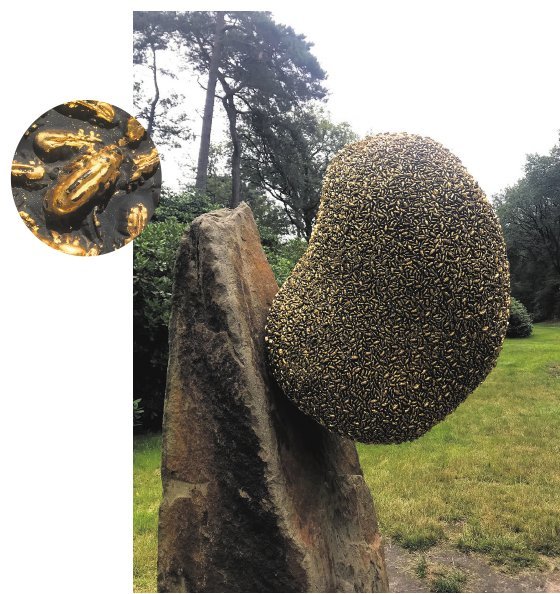
Rockswarm (2001) – Bill Woodrow, Kröller-Müller Museum.
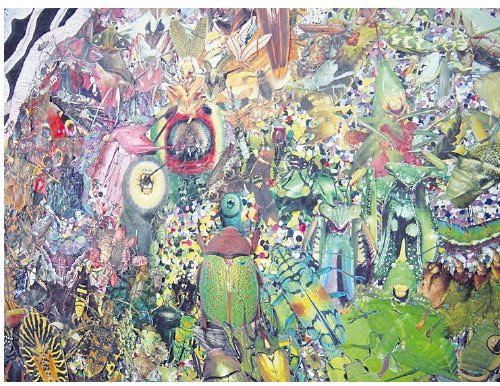
Detail from untitled work – Sara Dolman, Galerie Wit.
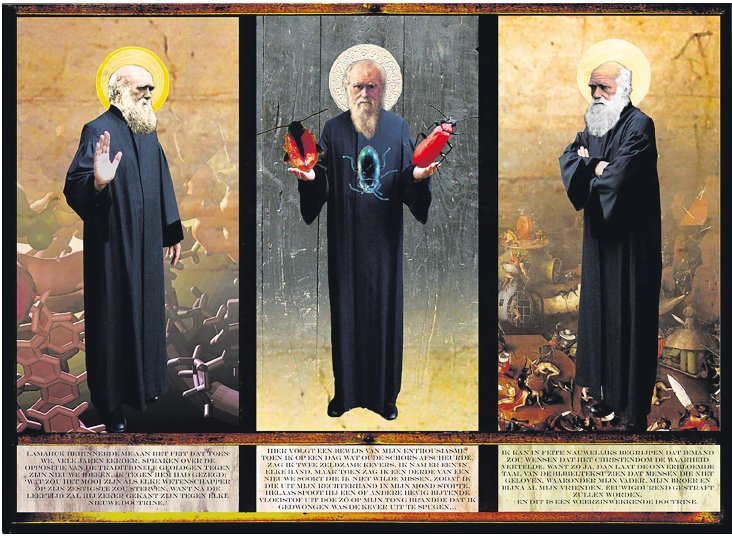
Darwin, icoon van nu (2009) – Stephan de Jong.
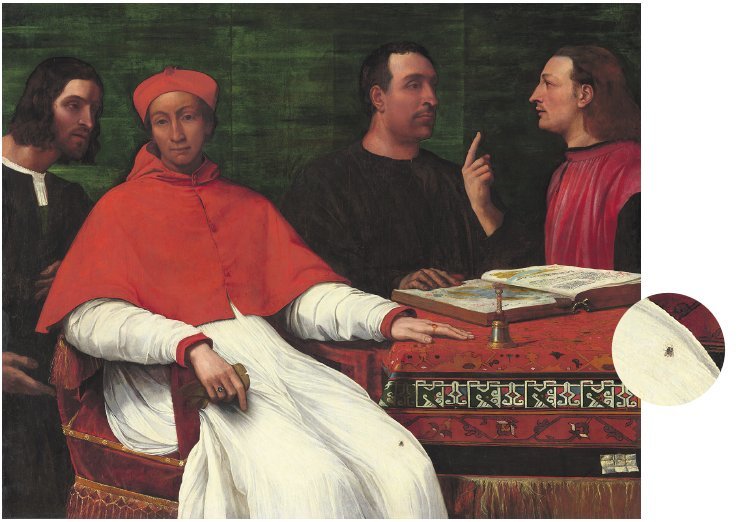
Cardinal Bandinello Sauli, His Secretary and Two Geographers (1516) – Sebastiano del Piombo.
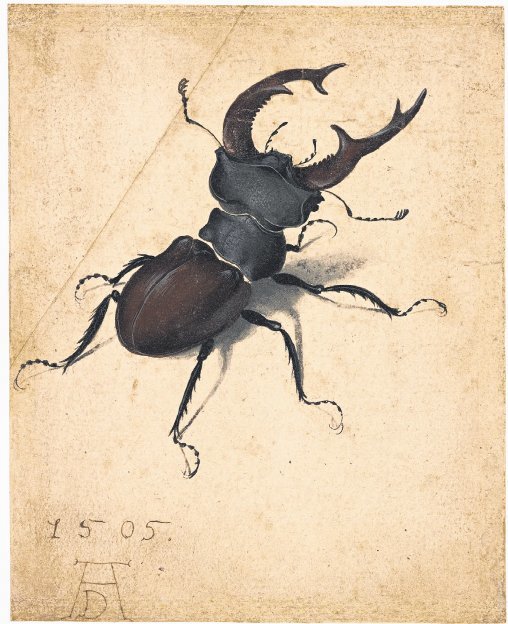
Stag Beetle (1505) – Albrecht Dürer, The J. Paul Getty Museum, Los Angeles.

1957 born in Dordrecht
1975 studied biology in Leiden
1988 PhD in Wageningen
1992 Dutch Zoology Prize
1996 Belgacom Prize
1997 launch of Insects & Society lectures
1997 Uyttenboogaart-Eliasen Chair (5 years)
2002 personal professorship
2003 professor of entomology / Vici
2005 Insect-plant biology (co-author)
2006 Rank Prize / Academic Annual Prize / Muggenzifters en Mierenneukers (co-author) / City of Insects
2007 Spinoza Prize
2011 KNAW member / Blij met een dooie mug
2012 Het Insectenkookboek (co-author)
2013 visiting professor Cornell University (3 years) / Eureka Prize
2014 1st Insects to Feed the World conference
h-index: 135
# publications: 735
# PhD students: 115
See also:
–De stille lente van 2025 – Farewell lecture of entomologist Marcel Dicke – Resource, 18 May 2025
PHOTOS: MARCEL DICKE, ALIDA MAANDAG, VINCENT VAN GOGH FOUNDATION, STEPHAN DE JONG, RIJKSMUSEUM AMSTERDAM