


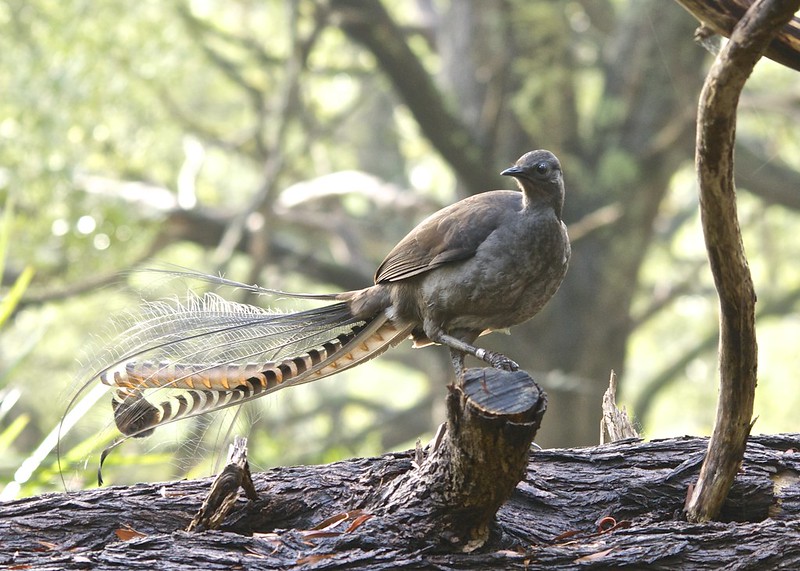
The Australian lyrebird (Menura novaehollandiae) is renowned for its spectacular tail and ability to mimic sounds, but it turns out to be a resourceful farmer as well. By raking and scratching through soil and leaf litter, the bird creates microhabitats in which its favoured prey – worms, centipedes and spiders – thrive in greater numbers (Journal of Animal Ecology, 4 March). This was discovered by Australian ecologists who counted invertebrates over three spring seasons in fenced plots with and without lyrebirds, across three types of eucalyptus forest. Plots with soil disturbance yielded significantly more prey species, after correcting for predation. Lyrebirds displace an average of 155 tonnes of litter and soil per hectare. It is a form of animal husbandry that is rarely seen in nature. (GvM)
See also:
–Iconic lyrebird reveals hidden farming talent – La Trobe University website, 5 March 2025
–Lyrebird mimics mobbing flock – Bionieuws, 27 February 2021
Photo: Flickr/Brian Ralphs