


 The monarch butterfly is immune to the toxic chemicals of the milkweed plant and also uses the plant as medicine. Photo: Jack Folkers
In Nature’s Healers, biologist Jaap de Roode reveals how animals employ surprisingly sophisticated forms of self-medication and what we can learn from them.
‘My students and I call it the monarch health check. Like doctors and nurses, we wear latex gloves when we press a small, transparent sticky label onto the butterfly’s abdomen (it causes them
no pain). We then transfer the label to an index card. Using a microscope, we check whether we can see the tiny black spores of the parasites’, writes Jaap de Roode in the opening chapter of his book Nature’s Healers. In it, the Dutch biologist – who conducts research into infectious diseases and behaviour in the United States – gives a detailed account of his own study of monarch butterflies infected with a single-celled parasite that is lethal to them. De Roode takes the reader step by step through his entire research process, from prior knowledge and hypothesis to experimental design, expectations, and ultimately a striking conclusion: the monarch butterfly is not only immune to the toxic chemicals of its favourite food – milkweed – but also uses the plant as medicine. An infected female butterfly inadvertently passes the parasite on to her offspring, but can protect her young by laying her eggs on plants with higher concentrations of toxins. Infected females turn out to choose more toxic plant species more often than healthy females, and the infected caterpillars that subsequently feed on those plants become considerably less ill from the parasite than the control group.
This finding sparked De Roode’s fascination with the remarkable relationship between the animal and plant kingdoms, and it is just the first of many similar stories brought together in Nature’s Healers. In the chapters that follow, De Roode reveals the fascinating secrets of other insects, as well as birds, reptiles and mammals, when it comes to self-medication. The aim of the book, in the author’s own words, is twofold: ‘First, I want to show that animals have evolved into excellent medical experts. They may not speak Latin, know how to behave at a sickbed, or write prescriptions, but they have discovered numerous ways to keep infectious diseases in check using a remarkably refined form of medicine. Second, I want this book to make clear that we stand to benefit from studying these animal doctors.’ He does not mean to suggest that the book should be taken as medical advice – as the disclaimer on one of the opening pages makes plain. But the antiparasitic behaviours of bees could, for instance, help improve beekeeping; the medicating behaviour of sheep and goats offers valuable insights for reducing antibiotic resistance in livestock farming; and insect-repelling compounds discovered by cats are currently being developed into repellents.
Nature’s Healers is, however, more than just a collection of compelling animal stories. It gives a voice to the researchers behind these discoveries through numerous interviews, describes the difficulties of the field, and challenges the reader to reflect on psychological questions – including the sometimes razor-thin line between learned and instinctive behaviour. Throughout, the book clearly reflects De Roode’s passion for the subject. He writes with enthusiasm, with solid scientific grounding yet in a light and engaging manner, as though he were sitting across from the reader at the kitchen table.
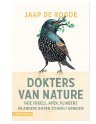
NATURE’S HEALERS – Jaap de Roode
Paperback, 240 pages, €27.95