


A natural history exhibition that offers more than biodiversity and ecological importance. Het bos van Suriname honours Surinamese nature without shying away from the colonial past.
‘Nature has a voice. Come and listen’ – so Naturalis promotes its new exhibition Het bos van Suriname (Suriname’s Forest). Visitors entering the exhibition hall on the seventh floor quickly discover that this so-called single voice of nature is in reality made up of many different sounds. The rustling of leaves and animal calls accompany the narrating male voice of the introductory film playing on a large projection screen at the entrance to the hall. Further in, more sounds can be heard, including a melodic female voice addressing visitors in English. Het bos van Suriname tells the story of Surinamese nature not through the eyes of an outsider, but from the perspective of various forest dwellers.
Striking
The cultural-historical dimension is striking, particularly given the occasion behind the exhibition: on 25 November, half a century ago, Suriname became an independent republic, separate from the Netherlands. In the exhibition, visitors to Naturalis genuinely feel transported to the Surinamese forest, which still covers more than 90 per cent of the country’s surface area. Spread throughout the hall – bounded by floor-to-ceiling photographic walls – are pillars disguised as trees. On canvases suspended from the ceiling, projected butterflies flutter cheerfully about, and part of the floor has been transformed into a river teeming with moving caimans. At the centre of the space rises an enormous replica of the kapok tree (Ceiba pentandra); a sacred symbol for the Surinamese communities that have inhabited this forest for centuries. Many of the exhibited collection pieces are kept in semi-darkness, until a visitor illuminates them by pressing a light switch. There is always something new to see and discover; children and adults alike can spend a considerable amount of time wandering through Het bos van Suriname.
Indigenous peoples
The exhibition showcases the ecological, spiritual and cultural significance of the Surinamese rainforest, emphasising that people and nature here are inextricably bound together. On text panels distributed throughout the hall, Indigenous peoples (the original inhabitants of Suriname) and Maroons (enslaved people who escaped and their descendants) speak in their own words – communities who, as a result of the colonial past, now share the same land. Alongside plants and animals, cultural-historical sources and objects are also on display. There is space for remarkable stories about the animate forest, but also for the colonial history of collecting and its impact on Surinamese nature. Naturalis invites reflection and does not shy away from making clear that European scientists, in a context of inequality and violence, profited from the knowledge of Indigenous peoples and Maroons. Attention to the decolonisation of Suriname itself, however, is almost entirely absent.
Het bos van Suriname is therefore not a tribute to fifty years of independence, but it is a homage to Surinamese nature on the occasion of this independence anniversary. The exhibition encourages visitors to look and listen carefully. The heartfelt declaration ‘We care for the forest, and the forest cares for us’ lies at its heart: every living being in the forest is part of the same ecosystem that both needs care and provides it.
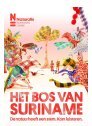
HET BOS VAN SURINAME – Naturalis Biodiversity Center, Leiden until 28 February 2027 · €18, free with Museumkaart