


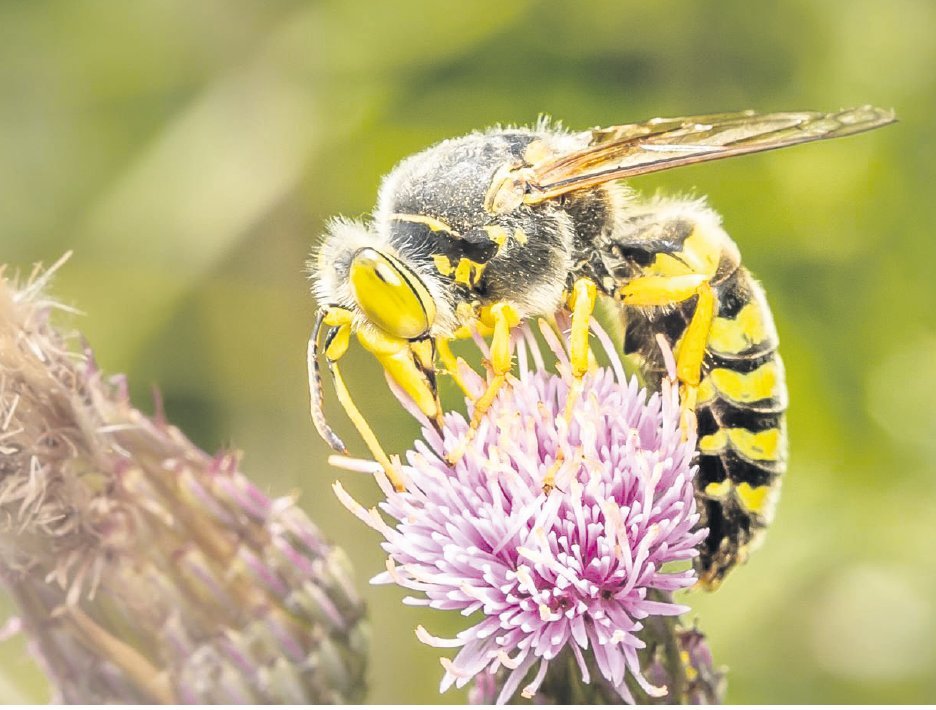
 Photo: Aglaia Bouma / Naturalis
A good advocate can sometimes work wonders. Perhaps that holds true for the sand wasp (Bembix rostrata) which, on 6 April, was elected Insect of the Year 2025 with a resounding majority. The wasp received no fewer than 46 per cent of the votes in this annual election. In second place came the ant-loving beetle (Claviger testaceus) with a mere 19 per cent of the votes. The sand wasp had been championed by the well-known barrister Bénédicte Ficq, who has been voted the best female criminal defence lawyer in the Netherlands year after year.
The sand wasp is the largest digger wasp in the Netherlands, living mainly in dunes. The females have a comb on their legs with which they rake away sand and excavate their nest. The attentive wasp lays her eggs on captured flies and also ensures that the larvae are continually supplied with fresh flies to eat.
The wasp was given the name Apis rostrata (‘beaked bee’) in 1758 by Linnaeus, the Swedish godfather of taxonomy. Here, rostrata is the feminine form of rostrum, Latin for ‘beak’ – a reference to the mouthparts (the labrum) which taper into the shape of a narrow beak. The Danish zoologist Johann Christian Fabricius, one of the leading entomologists of the 18th century, quickly recognised that the sand wasp was no bee, and in 1775 generously assigned the species its own genus in his Systema entomologiae. In that reference work, however, this genus appeared – possibly due to a printing error – as Bembyx, whereas Bembix is, according to a 1976 revision of the digger wasp family (Sphecidae), the correct spelling. To add to the confusion, Fabricius himself used the genus name Bembex in later publications, making the origin of the name even more obscure. In short: in terms of nomenclature, the caring sand wasp certainly deserves no beauty prize – but thanks to its triumphant election as Insect of the Year, we can safely put all that behind us a century and a half later.